Compare the pros and cons of SEO vs. paid ads to decide which approach suits your growth goals.
When businesses ask us: “How do I grow fast while staying sustainable for the long haul?”, the answer often walks the tightrope between SEO and paid advertising. At BusySeed, we’ve worked as Growth Architects for over 500 businesses, from bootstrapped startups to Fortune 500s, and we know one thing for sure: there's no one-size-fits-all strategy.
Whether you’re Googling “local seo services near me” or hunting down the “top ad agencies in NYC,” you’re really asking: Should I build slow and steady with organic search, or pay to play and get clicks right now?
In this guide, we’ll break down the pros and cons of SEO and paid ads, explore which is best depending on your goals, and show you how both can work together for scalable success.
Let’s dive in.
SEO vs Paid Ads: What's the Difference?
Before you decide which road to take, it’s important to understand the landscape.
SEO (Search Engine Optimization) involves optimizing your website to rank higher in organic search results. It's the long game, but when played right, it pays off exponentially without paying per click. Search engines reward quality and consistency. This involves a continuous process of on-page optimization, technical SEO, link building, and content creation that aligns with user intent and search engine algorithms. The goal is to earn visibility, rather than pay for it.
On the other side, Paid Ads (such as Google Ads, Meta Ads, or Display Networks) deliver quick visibility by bidding on ad placements, you pay to get noticed, and pay when users click. This is often referred to as Pay-Per-Click (PPC) advertising, providing immediate exposure and allowing for precise targeting of specific demographics, interests, and keywords.
You’ve probably already used both strategies in some way. Maybe you've tried a Google search for “marketing companies NYC” and clicked a sponsored ad. Or you searched “how do I check my website ranking on google” and found a helpful SEO blog on page one. Both have their unique strengths and weaknesses, making the choice dependent on your business objectives and available resources.
Let’s assess both strategies by their impact:
The Long-Term Play: SEO
Pros:
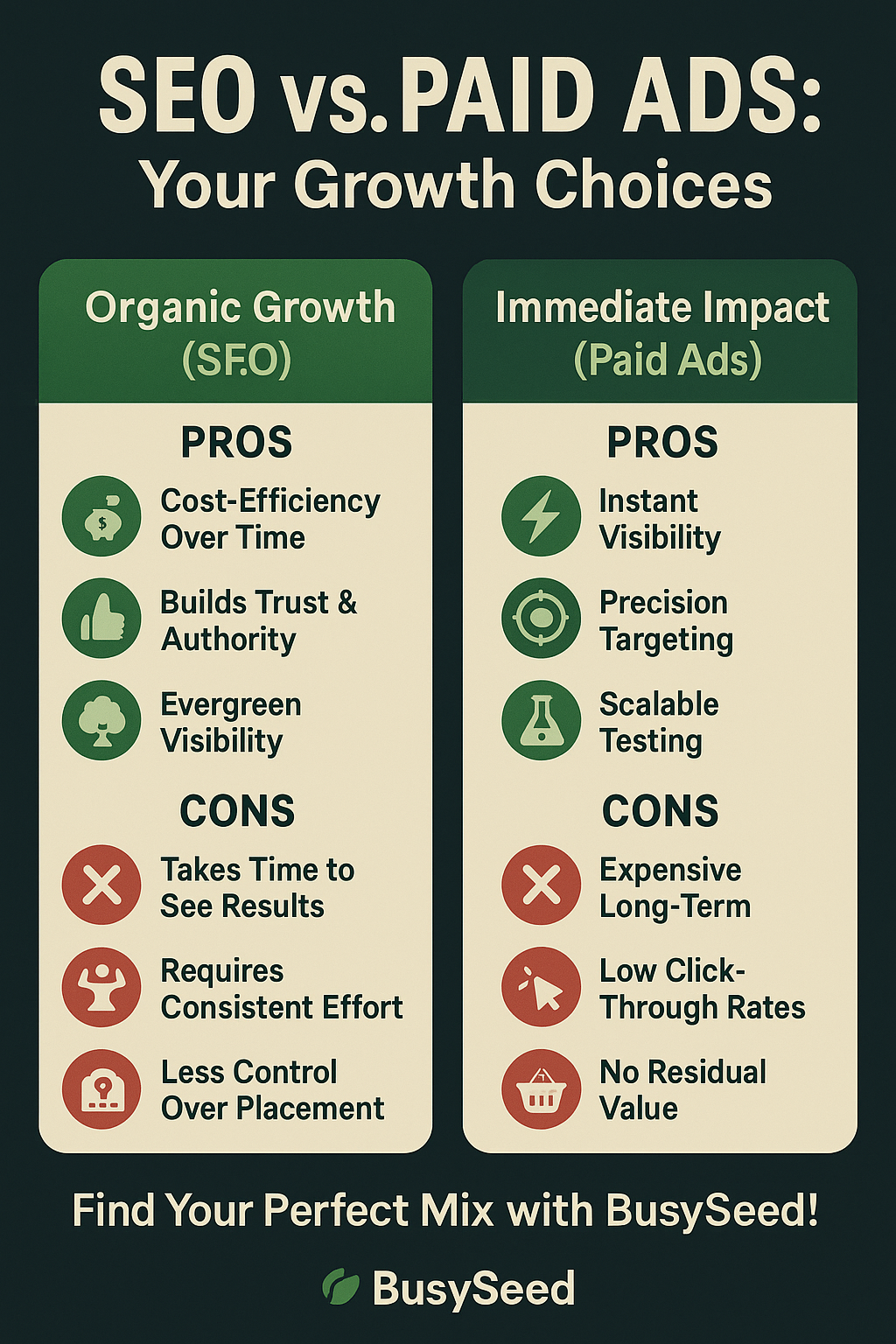
- Cost-Efficiency Over Time: Once your content ranks, clicks are free. Compared to paid campaigns, SEO costs can stay consistent while ROI increases. While initial investment in SEO services might be significant, the compounding effect of organic traffic over years makes it incredibly cost-effective in the long run.
- Builds Trust and Authority: Users trust organic results more than ads. High rankings signal Google’s trust, and that’s hard-earned. This organic credibility can translate into higher conversion rates and stronger brand loyalty, as consumers perceive businesses that rank organically as more authoritative and reliable.
- Evergreen Visibility: Your top-ranking assets can drive leads for years, especially if paired with consistent content updates. An evergreen blog post or resource page, once it ranks well, can continually attract relevant traffic without ongoing per-click costs, providing a stable foundation for lead generation.
Cons:
- Takes Time to See Results: SEO is a marathon. It may take 3-6 months to rank competitively depending on your industry. For highly competitive keywords or industries, it can take even longer, sometimes up to a year or more, to see significant organic visibility. This requires patience and a sustained investment.
- SEO Requires Consistent Effort: Ranking isn't “set and forget.” Algorithms change. So do competitors. Google constantly updates its ranking factors, and competitors are always working to outrank you. This necessitates continuous monitoring, optimization, and content updates to maintain rankings.
- Less Control Over Placement: Unlike ads, you can't choose exactly where and when your content appears. While you can optimize for specific keywords, the ultimate decision of ranking and position rests with search engine algorithms, which are complex and opaque.
Use SEO when: You’re playing a long game, want sustainable growth, and aim to become the best local seo company in your niche. If you’ve already wondered “how do I check my website ranking on google”, You’re ready to start. SEO is ideal for businesses looking to build a strong online foundation, establish long-term brand authority, and reduce their reliance on paid advertising over time.
The Quick Win: Paid Advertising
Pros:
- Instant Visibility: Need traffic this week? Turn on a paid campaign and show up on top immediately. Paid ads offer an unparalleled speed to market, allowing businesses to capitalize on trending topics, seasonal demands, or new product launches almost instantly.
- Precision Targeting: You control who sees your ad, by location, behavior, keywords, and more. This granular control allows advertisers to reach highly specific segments of their target audience, minimizing wasted ad spend and maximizing relevance.
- Scalable Testing: Testing new offers, landing pages, or strategies is fast with paid ads. The immediate feedback loop of paid campaigns allows for rapid A/B testing of different ad creatives, headlines, calls to action, and landing page designs to quickly identify what resonates best with your audience.
Cons:
- Expensive Long-Term: Cost-per-click (CPC) can spike, especially in competitive markets like marketing companies in NYC. As soon as you stop paying, the traffic disappears. This means ongoing costs can accumulate significantly over time, impacting overall profitability if not managed carefully.
- Low Click-Through Rates (CTR): Only ~5% of users click paid search results. The rest skip to organic listings. While paid ads offer instant visibility, the conversion rate from impression to click can be lower compared to organic results, as users are often aware they are clicking on an advertisement.
- No Residual Value: Once you stop paying, your traffic disappears. No lingering brand equity. Unlike SEO, which builds an enduring asset in your website's organic ranking, paid ads provide traffic only as long as your budget allows.
Use Paid Ads when: You need immediate results, are testing a new offer, or have the budget to compete in a fast-paced market like advertising agencies NYC. Paid ads are excellent for driving immediate sales, promoting limited-time offers, or gaining rapid market insights through quick testing cycles.
SEO vs Paid Ads: A Side-by-Side Comparison
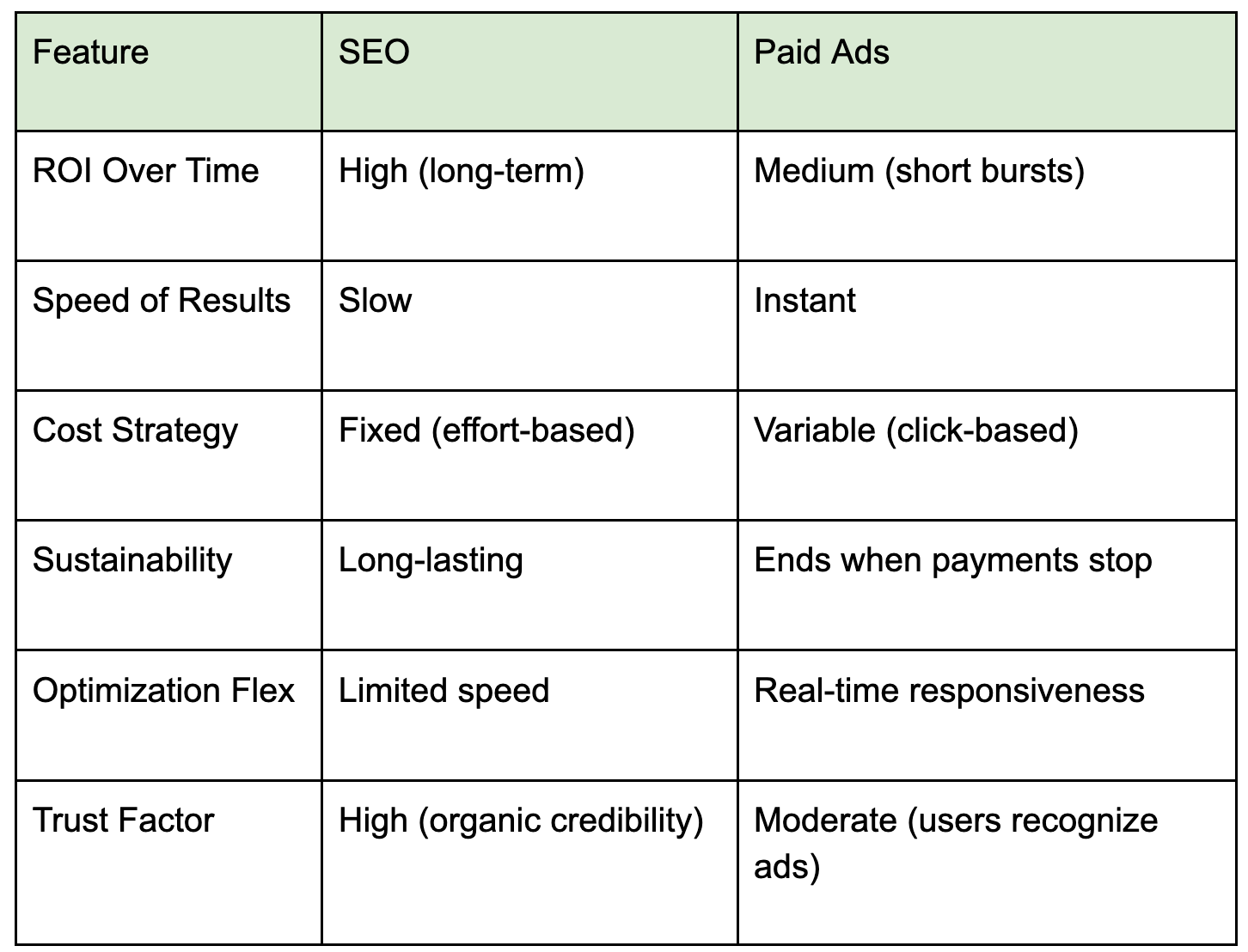
This table clearly illustrates that SEO and Paid Ads serve different strategic purposes. While SEO builds sustainable, trusted authority over time, Paid Ads offer immediate, controllable visibility. Understanding these distinctions is crucial for developing a balanced and effective digital marketing strategy. Many of the top ad agencies in NYC advise clients to leverage both for optimal results.
The Hybrid Strategy: Why Not Both?
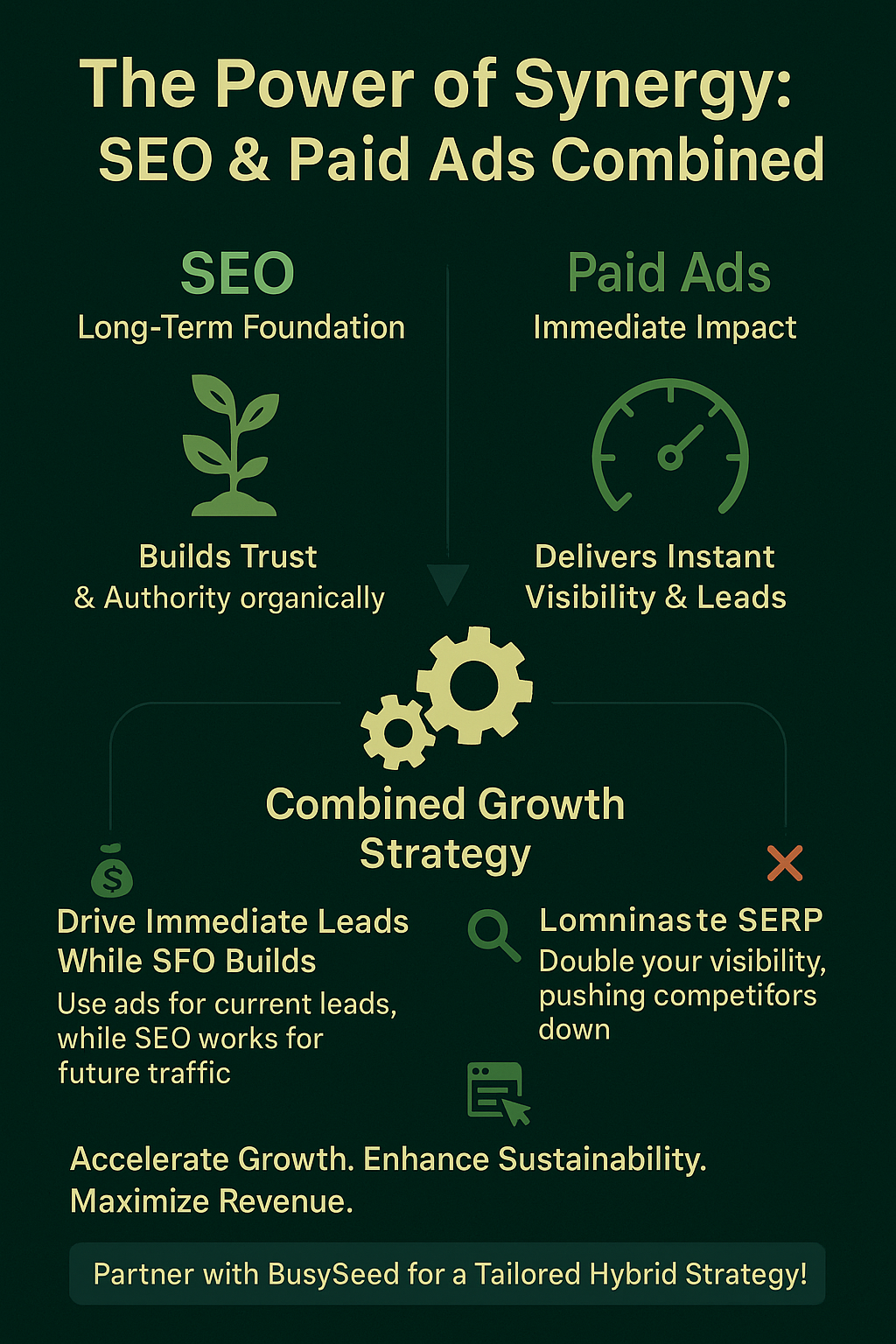
The best combination for growth? Using both SEO and paid ads in tandem.
Here's why:
- Drive Immediate Leads While SEO Builds: Use paid ads to bring in leads now, while SEO content climbs up rankings. Once your blogs or product pages start to rank, shift budget back into SEO optimization. This ensures a continuous flow of prospects even during the long ramp-up period of SEO.
- Leverage Data Across Channels: The keyword with the best CTR in your ad campaign might be what you optimize an SEO blog around, and vice versa. Data from paid campaigns can provide invaluable insights into high-performing keywords, ad copy, and audience segments that can then inform and refine your SEO strategy. For instance, if a particular paid ad keyword drives high conversions, it's a strong candidate for an SEO content piece.
- Dominate the SERP: Claim paid ad space AND organic rankings for key search terms like “best local seo company” or “top ad agencies in NYC”. You’ll double your visibility and edge out competitors. This "double dip" strategy ensures maximum brand exposure and clicks, making it harder for competitors to gain visibility. It's a strategy often employed by the most effective
marketing companies NYC work with.
This synergistic approach allows businesses to achieve both short-term revenue goals and long-term sustainable growth. It's about creating a comprehensive digital footprint that captures users at every stage of their buying journey.
Real-World Examples from BusySeed Clients
Case Study 1: Local Bakery in Brooklyn We implemented
local seo services near me for a family-owned bakery that originally relied solely on foot traffic. Within 4 months, their page ranked on Google's map pack anytime someone searched “local seo services near me” + “bakery”. Their online orders jumped by 67%. After six months, we layered in Google Ads during holiday peaks to maximize order volumes. This demonstrates how SEO built a foundational presence, while paid ads provided a powerful boost during crucial periods.
Case Study 2: E-Commerce Brand An eCommerce startup came to BusySeed needing rapid sales. Within weeks, our paid ad campaign netted a 400% ROAS, allowing them to reinvest profits into content that improved their organic listings. Now, 60% of their web traffic is organic, reducing dependency on ad spend, with higher margins to boot. This example clearly illustrates the powerful cycle where immediate paid ad returns can fund long-term SEO growth, creating a more sustainable and profitable business model. It's a common strategy among the most successful advertising agencies NYC collaborate with.
Which One’s Right for Your Business?
Ask yourself:
- Do you need leads today or are you focused on dominating next quarter?
- Do you have the budget to sustain paid campaigns?
- Are you willing to invest in long-term authority?
At BusySeed, we help clients answer those questions every day. Whether you’re searching for “advertising agencies NYC” for a rapid lift or “local seo services near me” for sustainable reputation building, the truth is: the most successful businesses do both, at the right time.
As Growth Architects, we tailor strategies that blend immediate wins with long-term scalability. Because it's not just about traffic, it’s about revenue. Understanding your immediate needs versus your long-term vision is the first step in crafting a successful strategy. The answer to "how do I check my website ranking on google" often reveals the need for a comprehensive SEO plan, while a pressing sales target might point towards immediate paid ad campaigns.
Key Takeaways
- Choose SEO for long-term, cost-effective, trustworthy growth.
- Choose Paid Ads for quick results, precise targeting, and testing agility.
- Do both when you want to scale fast without sacrificing sustainable footing.
- Keywords like “how do I check my website ranking on google” reflect an SEO-focused mindset, while “top ad agencies in NYC” suggests urgency, your goals define your path.
Ready to Grow Smarter?
Schedule a free consultation to discuss How to Choose Between SEO and Paid Ads for Immediate and Long-Term Growth with a member of our expert team.
Or, contact BusySeed today to learn more about how we can help you tailor the right mix of SEO and paid strategy to drive real revenue growth.
Don’t just chase clicks. Build momentum.
Download our free guide on How to Choose Between SEO and Paid Ads for Immediate and Long-Term Growth for more in-depth insight.
FAQ
Q1: What is the main difference in cost strategy between SEO and Paid Ads?
A1: With SEO, the cost strategy is typically fixed or effort-based. You invest in optimizing your website and creating content, and once it ranks, clicks are free. For Paid Ads, the cost is variable and click-based , meaning you pay for every click or impression, and costs can escalate, especially in competitive markets.
Q2: How long does it typically take to see results from SEO efforts?
A2: SEO is a long-term strategy, and it typically takes 3-6 months to see competitive ranking results, depending on your industry and the competitiveness of your keywords. In some highly saturated markets, it can take even longer to establish significant organic authority. This is why SEO requires patience and consistent effort.
Q3: Can data from paid ad campaigns inform my SEO strategy?
A3: Absolutely. Data from paid ad campaigns, such as high-performing keywords, effective ad copy, and successful landing page variations (measured by CTR and conversion rate), can provide invaluable insights for your SEO strategy. This allows you to optimize your organic content around proven concepts, accelerating your SEO results. Many of the best local seo company and top ad agencies in NYC leverage this cross-channel data.
Q4: When is it best to use a hybrid strategy of both SEO and Paid Ads?
A4: A hybrid strategy is ideal when you need immediate leads and visibility while simultaneously building long-term sustainable growth. It allows you to quickly generate traffic and sales with paid ads, and then reinvest profits or resources into SEO to build organic authority and reduce long-term dependency on ad spend. This approach also helps dominate search engine results pages (SERPs) by claiming both organic and paid positions.
Q5: How do I know if I need local seo services near me or if I should focus on paid advertising?
A5: The best way to determine your strategy is to assess your immediate goals and resources. If you need quick traffic and sales, and have a budget for ongoing ad spend, paid advertising is a good fit. If you’re focused on building long-term brand authority, reducing per-click costs over time, and becoming a leader in your local market, then
local seo services near me are essential. Ultimately, the most successful
marketing companies NYC recommend a tailored blend of both strategies, adapting to your specific business needs and market conditions.