
Surviving highly saturated digital spaces in 2026 requires moving away from isolated, single-platform marketing silos. Relying on one acquisition channel exposes a brand to escalating costs and algorithmic volatility. An omnipresent brand strategy overcomes this by establishing a synchronized, multi-platform presence that captures attention across many touchpoints at once.
- U.S. digital ad revenue hit $294.6B in 2025, with more brands fighting over the same finite attention than ever (IAB, 2025).
- Average Google Ads cost per lead rose to $70.11, a 5.13% YoY increase (WordStream, 2025).
- Only 32% of marketers measure media spending holistically across channels (Nielsen, 2025).
- BusySeed's NFL cruise-line case study generated 541 calls at $4.03 per call on a total spend of $2,178.71.
- 87% of consumers have paid more for a brand they trust; omnipresence scales trust (Salsify, 2025).
Introduction
U.S. digital marketing has reached unprecedented saturation, forcing brands to rethink their paid media strategy. "Omnipresent" may sound abstract, but it refers to a concrete approach to brand recognition across every touchpoint a customer encounters during research, evaluation, purchase, and post-purchase.
As platforms evolve and privacy rules reshape targeting, the single-channel acquisition model is no longer viable, thanks to rising CPMs, platform deprioritization of certain ad products, and shifting audience behaviors. The only sustainable solution is an omnipresent strategy that distributes risk across channels while optimizing for maximum impact. If you need help auditing your channel mix, BusySeed can build a custom roadmap.
Is the market actually saturated, or does it just feel that way?
The market is not just saturated; it is structurally fragmented. WordStream's 2025 benchmarks show the average cost per lead for Google Ads reached $70.11, a 5.13% increase from 2024. Brands holding a fixed conversion rate while increasing budget will ultimately generate fewer leads over time.
Alternative formats complicate the landscape further: programmatic surged to $162.4B (+20.5%), online video reached $37.6B (+23.8%), and Connected TV hit $10.3B (+53.8%). Consumer attention is dispersed across formats, making a single-channel strategy inherently risky.
The three layers of an omnipresent strategy
Omnipresence doesn't require an infinite budget. It demands strategic ad spend allocation and a portfolio approach. A well-structured paid media strategy operates across three distinct layers:
- Demand Capture. High-intent placements (search, marketplaces) where consumers are actively seeking solutions. Think Google Ads, Amazon Sponsored Products, and integrated SEO + PPC.
- Demand Creation. Reaching consumers who don't yet recognize their need: short-form video, creators, CTV, community. TikTok, YouTube Shorts, and Reels excel here.
- Owned Conversion & Retention. Converting acquired customers at lower cost through email, SMS, and website optimization to maximize lifetime value.
The intersection of these three layers is where omnipresence truly takes shape, and mastering that intersection is exactly what we do at BusySeed.
How fragmented is audience attention in 2026?
A 2025 Pew survey (n=5,022) shows U.S. adults engage with multiple platforms daily, with no single platform dominating: YouTube 84%, Facebook 71%, Instagram 50%, TikTok 37%, WhatsApp 32%, Reddit 26%, X 21%.
Brands relying on a single platform miss vast segments of their audience. The solution isn't to be present everywhere, but to strategically select channels where your audience is most active, and to reassemble fragmented audiences by meeting them where they are.
Case study: NFL cruise line
The NFL cruise-line client faced immense market saturation, minimal social presence, and low inbound lead generation. Instead of a single-channel approach, BusySeed implemented a lean, dual-channel micro-budget strategy:
- Google Call Ads: $1,120.95 spent, generating 19 high-intent conversions.
- Facebook Ads: $1,057.76 spent to create additional touchpoints.
The key takeaway: a well-structured, multi-channel campaign can outperform single-channel efforts by 3 to 4× when spend is distributed strategically, and measuring blended CAC rather than platform-specific ROAS keeps you honest about real business outcomes.
Single-channel vs. omnipresent strategy
| Factor | Single-Channel | Omnipresent |
|---|---|---|
| Platform risk | High: one product change ends your flow | Low: distributed across surfaces |
| CPL trajectory | Increasing as competition concentrates | Moderated via diversified paths |
| Audience reach | Limited to one platform's users | Spans fragmented attention |
| Creative efficiency | Separate production per channel | One core story recomposed |
| Measurability | Simple but misleading (last-click) | Complex but honest (blended CAC) |
| Trust compounding | Minimal: buyer sees you once | Significant: multi-touch recognition |
| Resilience to change | Fragile | Structurally protected |
How SEO and PPC work together
SEO and PPC aren't competing strategies but complementary components of one system. SEO builds long-term organic authority; PPC captures high-intent traffic immediately. PPC conversion data reveals the exact intent worth targeting organically, while a well-ranking page improves a PPC ad's quality score, lowering CPC. Aligning them requires technical precision and a view of the broader marketing mix, which is where our experts at BusySeed come in.
Building it for the long haul
- Audit channel dependence. If a single platform drives more than 60% of leads, diversify immediately.
- Build one core proof story around a verifiable customer transformation.
- Decompose into platform-native assets: at least six 15 to 30 second videos with different hooks.
- Connect SEO & PPC so short-term ad wins build long-term organic authority.
- Measure business, not platforms: track blended CAC across all channels.
- Run one incrementality experiment per quarter (geo holdouts, dark tests).
- Plan for platform change annually: keep no single format above 40% of spend.
Bringing it all together
Omnipresence is no longer a luxury reserved for enterprise budgets; it's a baseline requirement for survival in 2026. You win by distributing your message intelligently, capturing intent where it lives, and building trust through consistent, multi-platform exposure. It's a system where SEO, PPC, social, and retention work together to reduce blended CAC and drive sustainable growth.
If you're ready to stop fighting platform volatility alone, let's talk. We'll audit your channel dependence, map a leaner multi-platform architecture, and execute a strategy that turns fragmented attention into measurable pipeline.
Works Cited
- Gartner. "2025 CMO Spend Survey." Gartner, 12 May 2025.
- Interactive Advertising Bureau (IAB). "Digital Ad Revenue Climbs to Nearly $300B." IAB, 2025.
- Nielsen. "2025 Annual Marketing Report." Nielsen, 2025.
- Pew Research Center. "Social Media Use in 2025." Pew Research Center, 20 Nov. 2025.
- Salsify. "2025 Consumer Research Report." Salsify, 2025.
- WordStream. "2025 Google Ads Benchmarks." WordStream, 2025.
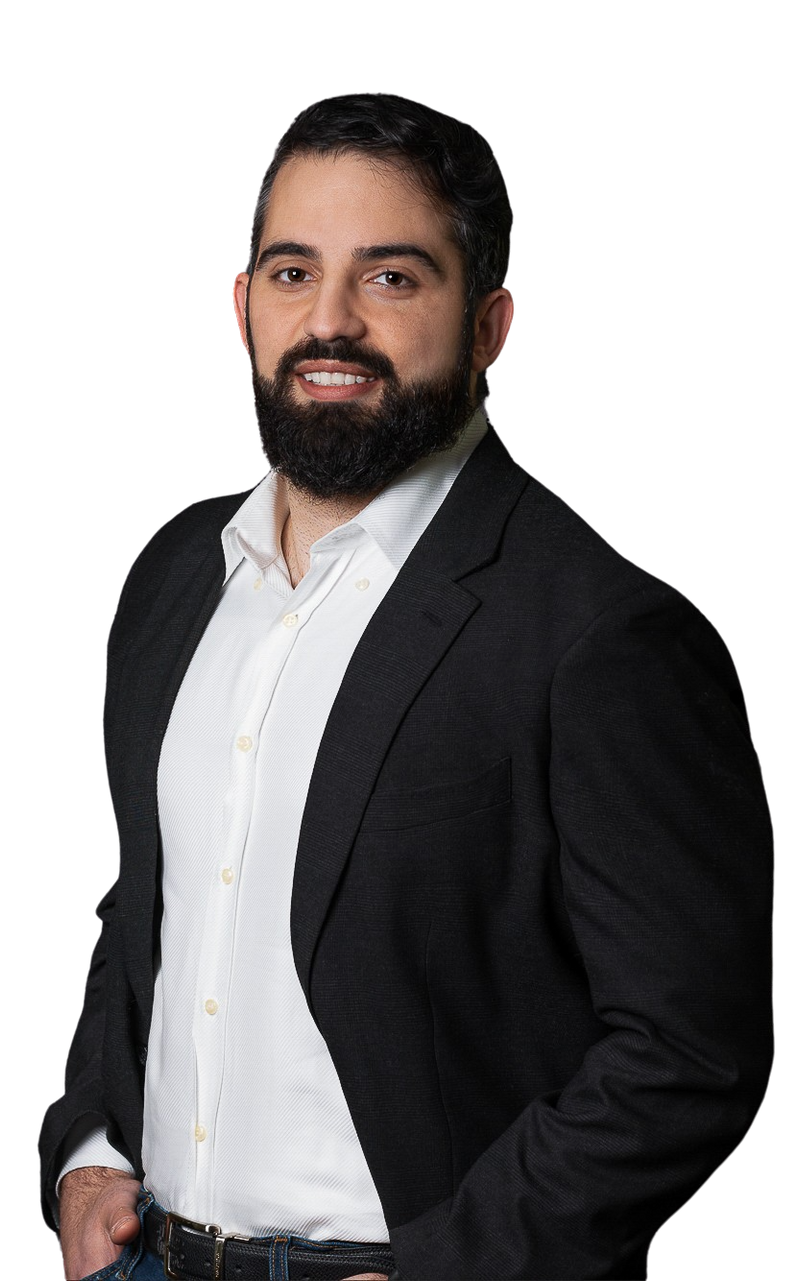
Omar is the Founder & CEO of BusySeed, an award-winning agency that has generated over $573M in revenue for 550+ businesses since 2013. With a background in computer engineering, he bridges data analytics and creative marketing, specializing in aggressive revenue scaling, SEO, and multi-channel lead generation through a "human-led, AI-assisted" philosophy.