
Years ago, brands and companies were expected to stay out of politics and avoid expressing opinions on controversial or news-worthy topics. Recently however, there has been a steady rise in the prevalence of belief-driven buying. Consumers are actively looking for brands that express beliefs they support. Here's why it's time to take a stand with your company!
Don't talk about politics, money, or religion. That's the rule, right? Actually, no, not anymore. Today, businesses are expected to take a side in arguments about previously-taboo topics like race, religious freedom, sexuality, prison reform, environmental conservation, and more! For many consumers, if a brand isn't speaking out, they're assumed to be in agreement with the aggressor or oppressor. Being silent is not an option anymore. Businesses need to believe in something and express that to customers. The average person is relying more and more heavily on principle or moral-based purchase decisions than ever before. You may have the best product on Earth, but if you aren't supporting movements, many consumers will keep on walking. Let's take a deeper dive into this belief-based purchasing behavior.
What Is Belief-Driven Buying?

Belief-driven buying is essentially when consumers put principle over product. They will make purchase decisions based on the company's morals, beliefs, and public displays of support or condemnation of certain social issues. Years ago, it was taboo to mention any type of social or cultural problem as a business, but consumers have come to expect it. When a company takes a stand for or against a cause, it expresses the beliefs of the team, the executives, and everyone involved. Expressing beliefs personifies the brand and gives consumers something to relate to. Belief-driven buying occurs when a customer makes a decision based mainly (if not solely) on the stance a business takes in regards to an issue. For example, following the surge of the Black Lives Matter movement, many consumers are looking for brands that actively condemned racism and showed support to the cause. This can be as simple as using issue-appropriate hashtags, creating a post or two, mentioning the topic in newsletters, or adding new inventory to support. Staying silent on serious issues is no longer acceptable for companies. This has been a challenging switch for digital marketing agencies and marketing teams everywhere, but it's definitely a change for the better. It's extremely important to have a team you trust working on belief-centered materials to make sure you are not offending anyone or spreading incorrect information about the issue. Keep in mind that the mentality of belief-driven buying extends to B2B businesses as well, so if your morals do not align with those of your digital marketing agency, you should look for a better-suited partnership.
What Brands Are Seeing Success?
Ben & Jerry's: Ben & Jerry's has never been one to shy away from expressing their beliefs. In fact, on their website, you can find a page titled "Issues We Care About." They have always been very forward-thinking and transparent. For a long time, they were one of very few large brands actively taking stands against social injustices. On many occasions, Ben & Jerry's has created new flavors around social issues and a portion of the profits are donated to relevant charities. Most recently, they released Justice ReMix'd in partnership with Advancement Project National Office to support criminal justice/prison reform. Check out the great work Ben & Jerry's is doing here: https://bsyl.ink/IssuesWeCareAbout.
Nike: Nike is one of the most successful activewear brands in the world. Back in 2018, they released a very controversial ad featuring Colin Kaepernick that read "Believe in something. Even if it means sacrificing everything." Back in 2016, Kaepernick made headlines for kneeling during the National Anthem in an NFL game to protest systemic oppression. That simple act sparked a wave of revolutionary actions to made the country more inclusive and fair to everyone. Many people saw Kaepernick's action as "unpatriotic" or "disrespectful" to the flag. Nike ran the ads regardless to express its support for racial equality and drastic systemic changes. They lost many customers but gain just as many new ones! They're know known as one of the most active brands for supporting social causes.
Airbnb: Following former President Trump's decision to temporarily close borders to refugees in 2017, Airbnb released a Super Bowl ad that fought back. CEO Brian Chesky wrote "No matter who you are, where you're from, who you love, or who you worship, you deserve to belong #weaccept." The message backs up Airbnb's mission statement and enforces that all people are welcome at Airbnb spaces. The company's goal is to provide short-term housing to 100,000 people "in-need" by 2022 including refugees, disaster survivors, relief workers, and more. Airbnb also committed to donating $4 million over a four-year period to the International Rescue Committee.
How Can You Start Expressing Company Beliefs?
So how can you become a socially-conscious brand? There are many options to choose from, and you can always come up with ideas of your own! Here are a few ways your digital marketing agency can transform you into a belief-based brands!
- Regularly post about world issues on social media platforms! Make sure that you and your digital marketing team do your research into the issue prior to posting about it. Be sure to use sensitive language and be prepared to handle negative comments.
- Add a page on your website dedicated to causes you support, donations you make, or important social justice issues you want to bring attention to. Ben & Jerry's is a great example of this. Compiling everything in one place shows your passion for multiple causes and helps consumers see if your set of beliefs align with theirs. The more causes you support, the more a consumer can trust that you truly do care and are not just hopping on a trend.
- Update images and logos if you can! For example, the BusySeed team added #BlackLivesMatter to our logo and recolored it black. During pride month, we switch our social media profile picture to a rainbow version of our leaf. You can also change your cover image to reflect social issues going on, you political stance, or to celebrate an important holiday.
- Create a linktree that leads to donation pages, relevant articles, and even documentaries about issues you care about.
- Put your money where your mouth is and make donations to organizations working to change the world for the better! BusySeed lets clients choose where they want us to donate to in their honor from a list of charities! Every month, we send the donations out the their respective locations.
- Make your stance very clear to new clients (if you are B2B) and actively avoid working with anyone who does not share your point of view. Even if they offer you a huge amount of money to go against your beliefs, don't do it! Your loyal customers will lose all faith in you and your reputation will be ruined.
Will The Trend Last?
According to experts, reports, and statistics, belief-driven buying is far from a trend. Consumers are more open about their beliefs these days and they expect businesses to be as well. We are no longer content staying quiet and letting things stay as they are. The younger generations are doing everything possible to make much-needed changes in the world. Businesses must keep up if they want to be successful. This is your chance to make a difference and show your customers what your company is truly about. The excuse of "but I don't want to lose customers who disagree with us" is not valid and should not be used to argue against becoming socially-conscious. At the end of the day, yes, you will likely lose customers for stating your position on difficult issues, but you will also gain many new ones! You want to practice what you preach, so is it really that bad to lose support from people who are on the wrong side of history? Belief-driven buying does not appear to be going anywhere anytime soon. In fact, from what we can see on social media, it's only getting stronger. Brands are getting "canceled" for being insensitive and obtuse. You don't want to be the company at the center of the next big scandal. Partner with a digital marketing agency that aligns with your beliefs and get to work on social justice campaigns!
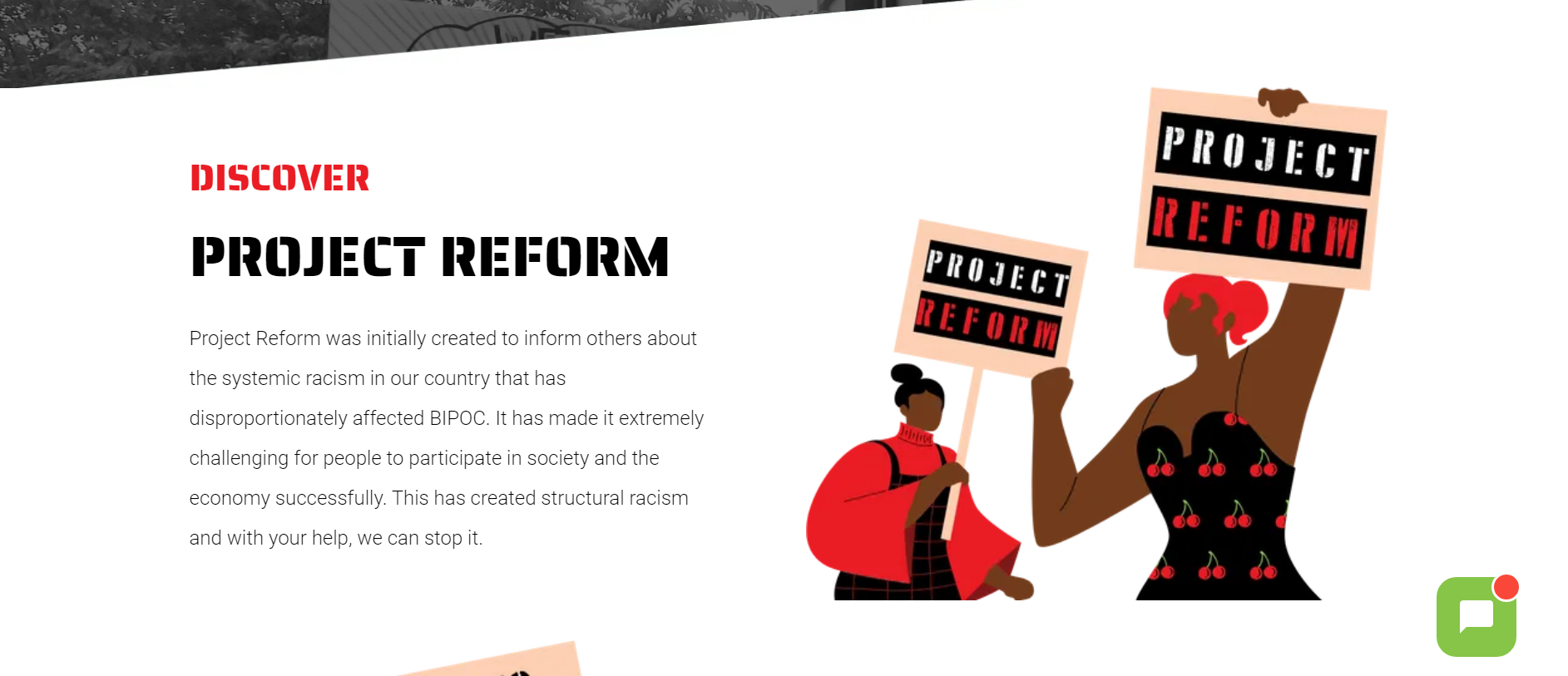
There's no time like the present to improve your company's image through supporting great causes! For many business owners - especially those that have been in business for years - it can be hard to feel comfortable discussing once-taboo topics. We encourage you to work with a digital marketing agency who can handle the transition for you. BusySeed takes pride in our commitment to social and economic reform, and we love to help clients step out of their comfort zones. We are a full-service digital agency with over 300 success stories. When we aren't working with clients, we're working on Project Reform, a separate entity of ours designed to educate people on racism, inequality, social justice, systemic problems, and more. Learn more about Project Reform and follow us on social media to see what we're about! If you think our values align well, reach out to us at (888) 353-1484 and we can get started! We'll build you a customized package of services and get you on the road to being known as a socially-conscious brand.