
Successful websites create funnels that draw users in and lead them towards completely your ultimate goal. Far too many businesses overlook website funnels or think they are all created equal. Each business goal needs it's own unique type of funnel in order to draw consumers in. Today, let's talk about the two most popular types of funnels you can implement on your site.

Having a good website is crucial for successful business these days. With more and more people turning to the internet to help them find goods and services, if you don't have a strong digital presence, you won't get many new customers. Not all websites are created equal, as you surely know from personal experience on the internet. Business sites need a website funnel to draw in results. E-commerce stores use sales funnels whereas service-based companies tend to focus on lead generation funnels. These are the two most common funnel types, and it's important to know how they work and how to built them. Today, our team of funnel making experts will walk you through some quick tips and tricks of the trade.
What Is a Website Funnel?
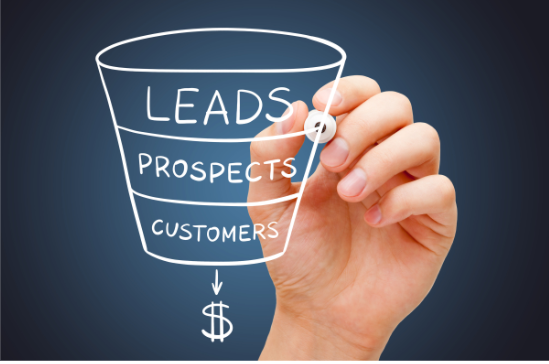
Before we go into the different types of website funnels, let's brush up on exactly what a funnel is. Occasionally, these are referred to as sales funnels or conversion funnels. If you see these three terms, consider them essentially interchangeable. A website funnel is designed to hook a viewer and guide them through the site onto pages with relevant information for converting them into customers. We call it a funnel because we are all familiar with what fennels look like and do. The have wide openings that get smaller in a cone shape to allow you to pour things into small containers. The idea of a website funnel is to bring someone from the broadest page of your website where only base-level information is through more and more specific pages, eventually finishing at the conversion page. Website funnels involve crafting navigation from one page to another to keep the viewer interested in your business and encourage them to dig deeper. This can include links to click, CTAs, buttons, various contact forms, and more. Sales funnels are crucial for effective website design. Without clear navigation that leads customers directly where you want them to be, they can get lost on your site and lose interest before converting. Top digital marketing agencies understand how to craft website funnels and will change them as needed based on the traffic flow on your site. Web developers know what makes viewers convert, and can build you a sales funnel that will exceed your expectations.
Online Sales Funnel
Let's first talk about a true sales funnel. As more and more businesses move towards online shopping, well-designed sales funnels are more important than ever. You need to be able to take a visitor from the landing page/home page and get them to click onto your store pages. The ultimate goal is sales, so you'll need to help customers navigate to items, then their cart, and finally through the checkout process. Sales funnels can have many different avenues from point A to point B, but each page must be convincing enough to take the visitor down further into the funnel. Here are some ideas from our team of digital marketing experts:
- On the home page of your e-commerce store, offer many ways to get to the store itself. Feature different categories of products, new releases, sales, and more to grab attention. You should also have clear navigation in the header/menu to all sections of the store. Mixed in with these easy-access store sections, be sure to include images or videos of the product, highlight your unique selling points, and let visitors know why they should choose you over your competitors. Be careful to find a sweet spot between too much CTA and not enough. Consider making images clickable rather than having 14 buttons all over the place. You can also link to other pages that you believe have relevant information such as About Us or FAQs.
- Make sure that your store is well-organized. If a customer makes it to your store, the website funnel is working but you can't stop it now. Divide your online store by genre, category, size, color, flavor... whatever you can easily compartmentalize your items into. Let's say you own a home décor company and have an online store. You may want to try separating the store by room type or décor type (ie wall art, mirrors, rugs, etc.). If you simply have all of the items haphazardly thrown onto a store page, visitors will feel overwhelmed and frustrated when they struggle to find what they're looking for. If they click into a smaller section of the store, they're one step closer to making a purchase.

- Offer related products or "Just For You." If you are successful at leading a consumer into the store, you next need to get them on an item page or hit the "add to bag" button. When visitors make it clear that they are interested in an item in particular, the sales funnel should offer up suggestions for other products they might enjoy. Amazon is the master at this, even including bundling ideas. It's a convenient way to navigate to another page for items the visitor has already confirmed they like. If they enjoy your nautical throw pillows, they also might like the rope-framed mirror, the anchor wall hooks, and the wicker side table! It can take a while to set up this related product situation, but digital marketing agencies handle it all the time and should have no problem. Using keywords and preset connections between items, your visitor could be persuaded to purchase multiple items at once!
- Seal the deal with a great checkout process. The final step to earning a sale is successfully collecting payment information. We all know about the dreaded Abandoned Cart Syndrome where a visitor has made it to the final stage of the funnel, only to back out. It's up to you to complete the sales funnel and get them to make the purchase! How can you do this? Make the payment process simple. Allow them to make an account for easy repurchasing, but also give them a guest option for one-time buyers. Allow autofill on applicable devices. Accept PayPal, Apple Pay, and cards to give them options. Offer them promocodes or free shipping. This is the last step in the funnel and it's clear that the consumer is interested in your products. Work with your digital marketing agency to create fast and painless checkout to seal the deal. If you can get them to hit "Checkout," you've made a successful conversion!
Lead Generation Funnel
The second website funnel you'll see a lot is the lead generation or lead funnel. Unlike a sales funnel, the final goal here is not to make a purchase but rather to submit contact information. Lead generation funnels are typically used by service companies who do not have physical products to buy. In this case, you're looking to collect information from potential customers so you can add them to an email list, set up a call, or schedule a consultation. Sometimes it even includes creating appointments, though this is less common. For this scenario, let's say you own a digital marketing agency. You don't have a store, but you still need a funnel! One could argue that lead funnels require more finesse than sales funnels do because there is no tangible "prize" on the other side. In addition, lead funnels typically ask for more personal info than sales funnels do. Consumers don't know you, so they can be hesitant to disclose sensitive data. It is extremely important to spend extra time building trust as the visitor travels through your website funnel. Since we have to build them for ourselves, digital marketing agencies are typically very proficient at creating lead generation funnels. Here are some of our top tips:
- Set a strong first impression. Make the landing page of your site as eye catching as you possible can. Use creative and informative headlines so that visitors want to keep reading. Get strong imagery, preferably some that is animated or dynamic is some way, and tell your story visually. Have prominent partners you work with somewhere towards the top of the page as well as any significant achievements or awards. Most importantly, highlight some client reviews/testimonials. As we said, the goal is to build trust, and nothing will do that more efficiently than peer reviews. Make sure all the most important pages can be accessed from the home page, especially in the header/menu. The less people need to scroll to find what they're looking for, the better.
- Highlight your achievements/strengths. While you should absolutely highlight your awards and achievements on the home page, you should also showcase them throughout the lead funnel. Name drop some prominent organizations you've been recognized by. Pop a logo or two in empty spaces besides text boxes. Have some scrolling testimonials to show off how many clients love what you do! Another great idea to build trust is to create pages with portfolios or case studies. Giving specific numbers and showing screenshot from real clients is solid proof that you deliver on your promises to get people results. Be sure to incorporate these pages into your website funnel via buttons in other sections on other pages.

- Give broad overviews on main pages with separate detailed pages for each service. Just as a funnel starts large and gets smaller towards the end, you want to give broad overviews of information upfront, and slowly work your way into more detail. The home page should include a comprehensive list of services, but you should not explain each one just yet. Give a short sentence or two followed by a CTA to learn more, or a clickable icon/image. When a customer clicks, they officially enter the funnel, and it's now time to break down the services they are expressing interest in. If you offer many things, consider separating them into categories. For the digital marketing agency example, you could divide services by Organic vs Paid Results, by industry, by platform, or by general category such as Graphic Design, Digital Ads, etc.
- Add contact forms to every page. Most consumers will need to make it through at least part of your funnel before deciding to work with you. That being said, it's a bit looser than a sales funnel. You could have one service page that blows the prospect away and convinces them to sign up then and there. That's not the typical pattern of a lead funnel, but it can happen. Because of this occasional outlier, you want to try to have a contact or lead generation form on each page. This can be in the form of a button to the contact page, a popup, or a form that lives in the footer of the site. This way, customers can react to their decision immediately rather than going hunting for a form and losing interest before they get there.
- Respond ASAP. Once a prospect makes it through your lead funnel, you must respond as quickly as possible. According to many studies, companies that respond to leads within 5 minutes are exponentially more likely to close the deal. Roughly 80% of customers will end up going with the business or agency that contacts them first. The sooner you call or reach out, the more likely it is to be you! Automated messages can be used to assist in the process, but leads need to hear from actual team members at least within the hour. Make sure your sales team can handle an influx of leads because when you work with a top digital marketing agency, you're sure to see results skyrocket.
Designing a website funnel is no easy task, but it's one that most agencies are familiar with. The funnel will reflect your goals and the size is dependent on the business you have. A healthcare business will likely require more trust-building stops to get leads than a car wash will. If you're ready to get 1000s of results from your website, it's time to start working with a top digital agency like BusySeed. We have helped to grow over 300 businesses online across all industries. Our team offers custom-built sites complete with a sales or lead funnel to improve your digital presence. Check out www.busyseed.com to navigate through our own sales funnel! To learn about how we've helped clients in the past, please visit or Industries pages! To get started with us, call (888) 353-1484. We offer a full range of digital marketing services including social media management, content creation, SEO optimization, website development, and funnel-driven sales and lead generation. We look forward to hearing from you!