
Omar Jenblat • March 6, 2020
When building a brand online, it’s crucial to have consistency in posts so that users can instantly identify where the content is from without even reading your handle. Here are some tips that we used to build a brand’s social pages from 0 to 9,000+ followers!
If you want your business to succeed online, it’s crucial to have a strong brand. Branding your small business is a great way to help people remember who you are. If you’re wondering why branding is important to a business, just look at some of the best of the best. I bet you can name these brands with no other hints needed. Try it!
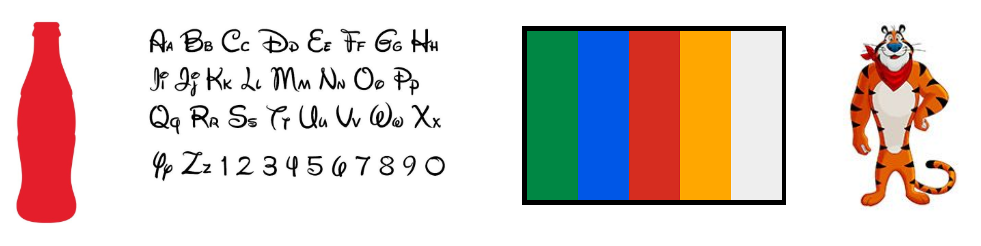
Can you do it? If you can, it’s clear that the marketing team at these companies are nailing it. This is why branding is important. The elements of these brands are so well-known that they’re all you need to identify a company. How did they get so easy-to-spot ? Consistency! Creating branded content that is consistent post over post is the best way to build a strong brand and brand following on social platforms. Here are a few tips and tricks we used to build a client’s Facebook from scratch and get them over 9,000 followers in a year!
Brand Everything You Post!
The first rule of creating a strong brand online is to brand everything. Every single post you make should have elements consistent with those in previous posts. We aren’t saying things need to be identical, but there should be some consistency throughout. Here are a few options to achieve this.
- Fonts: We almost always use the same fonts for all posts for a client because, as you can see from the Disney example, fonts can be strongly associated with brand. The type of font you choose can reflect on the tone of your brand. If you are working on branding your small business, be sure to pick a font that accurately reflects the feel of a brand. If you’re a tech company, you want to come across as modern. It would be advantageous to pick a sans serif font because they are much cleaner and more sleek. However, if you own a bookstore, you might want to go with some elaborate script or a serif font to pay homage to older books written by hand or typed on a typewriter. Generally speaking, you’ll want to have a few font options for headers and body text.
- Brand Elements : Incorporating brand elements into your creative is important in building a brand for your small business. Brand elements include logos, colors, characters, icons, shapes, tone of voice, and more. You want to keep these consistent across posts to strengthen the familiarity someone has with a brand’s content. In addition to helping people identify your posts in their feed, consistency with brand elements also creates a very obvious brand on your page itself for anyone that goes to check it out. We’ll be discussing brand elements in great detail in a future blog, and we already have a blog on how to stay on brand using elements.
Create A Brand Layout
Another tip that we find successful is creating a brand layout for social media, particularly Instagram. Think about the Instagram pages that you’ve visited that have a clear layout. They look very organized and it’s clear that there’s a vision in place. When building a brand, a layout can say alot to page visitors. Many people follow accounts if they have a nice aesthetic, so you want to create that for your small business’s social media. There are a few ways to create layouts based on your preferences. Some of our clients discuss certain topics on certain days in posts, while others have scheduled image changes to create a unique layout. Take a look at some of our favorite branded content that uses a layout.

Have A Set “Template” For Posts
Sometimes building a brand can be tricky. For example, maybe your company works with many seemingly-unrelated topics. Or, maybe you sell products in a wide range of categories. Perhaps you offer learning services for a huge array of topics. In these cases, it can be difficult to showcase all of your offerings in a consistent, cohesive way. Our suggestion? Create a “template” for your posts. This can be a banner, a border, logo placement, and more. YouTubers are excellent at this practice in their thumbnails. Even though the videos are about different topics, products, games, etc., the thumbnails have an overarching theme that makes it clear who made the content.
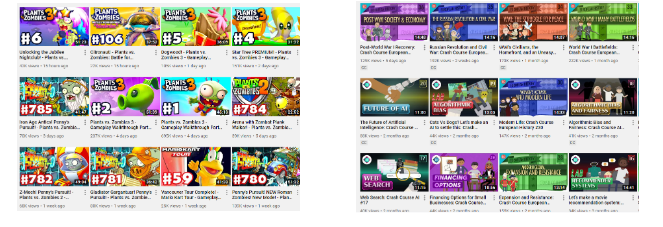
These screenshots show the videos of @zachscottgames and @CrashCourse. As you can see, they have a distinctive style and layout that make them easy to identify. In both cases, the logo is always in the same spot. For ZachScottGames, the game title is top left, the number in the series is in the lower left, and a character from the game is on the right. Every single video’s thumbnail is identical in terms of layout with minor changes to reflect the specific content. For CrashCourse, the same rules apply. The logo is top left in all thumbnails. CrashCourse takes it a step further and has specific templates for each series. The top line in the photo is all from a history series, and therefore all look identical. The font is the same, the graphic style is the same, and it’s clear that all of the videos were created by the same brand. This idea can be carried over to social media platforms to aid in building a brand through branded content.
Pick a Brand Voice and Tone
With posts comes copy, both in the creative and accompanying it. You want all of your posts to sound the same as well as look the same. Are you going for a professional tone? A conversational one? How often are exclamation points and emojis allowed? Do you add a space before a call to action? Do you use hashtags in the caption or as the first comment? You get the point. It’s important to write copy in the same way post over post. While the creative captures attention, many consumers will read the caption if they’re interested in your post. This is another opportunity for you to create strong branding. Some companies love to use emojis, and others say they’re off limits. Some companies use full URLs, and others find shorteners. Whatever you decide to do, stick to it with all posts. Choose a brand voice and always write in that tone. Your brand will thank you later.
We hope you’ve found these tips helpful. By using a few of them, we got a client over 9,000 followers in one year. If this whole “branding” thing seems like a lot of work, it’s time to call in the experts. The team at BusySeed has been building brands for years with many positive results. We’ll work with you to learn what you want your brand to express, and then we’ll create content that keeps those goals in mind. You won’t have to worry about a thing. Call us today at 833-353-1484 to get started!