17.24x
return on investment
How a B2B and B2C goods brand went from 14% to 96% AI visibility and grew sales while Google sent fewer clicks to everyone
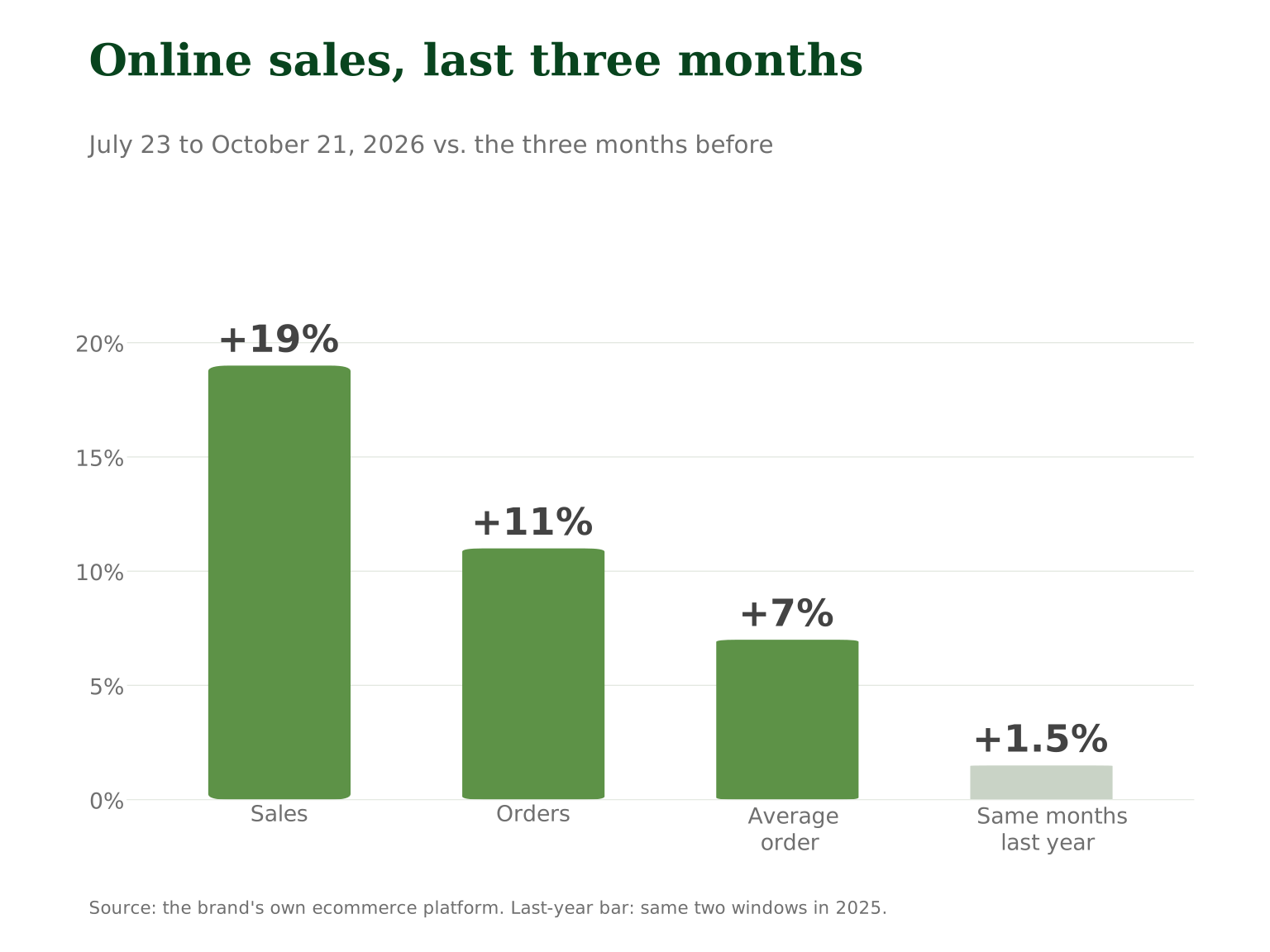
A B2B and B2C goods brand with 13 years in business was missing from almost every AI answer about its category. Starting in May 2026, BusySeed ran a generative engine optimization (GEO) program for the brand across ChatGPT, Claude, Gemini and Google AI Overviews. By October 2026 the brand appeared in 96 of 100 tracked buyer prompts, up from 14, and was named first on 70 of them, up from zero. It passed three global category leaders to become the brand AI names first most often in its category. Over the last three months its online sales rose 19% compared with the three months before, while the same stretch a year earlier grew just 1.5%.
The brand sells physical goods to two very different buyers: businesses that order in volume and consumers who order for themselves. It has been in business for 13 years, its team knows the category at a level most competitors cannot match, and its website had ranked on Google for years.
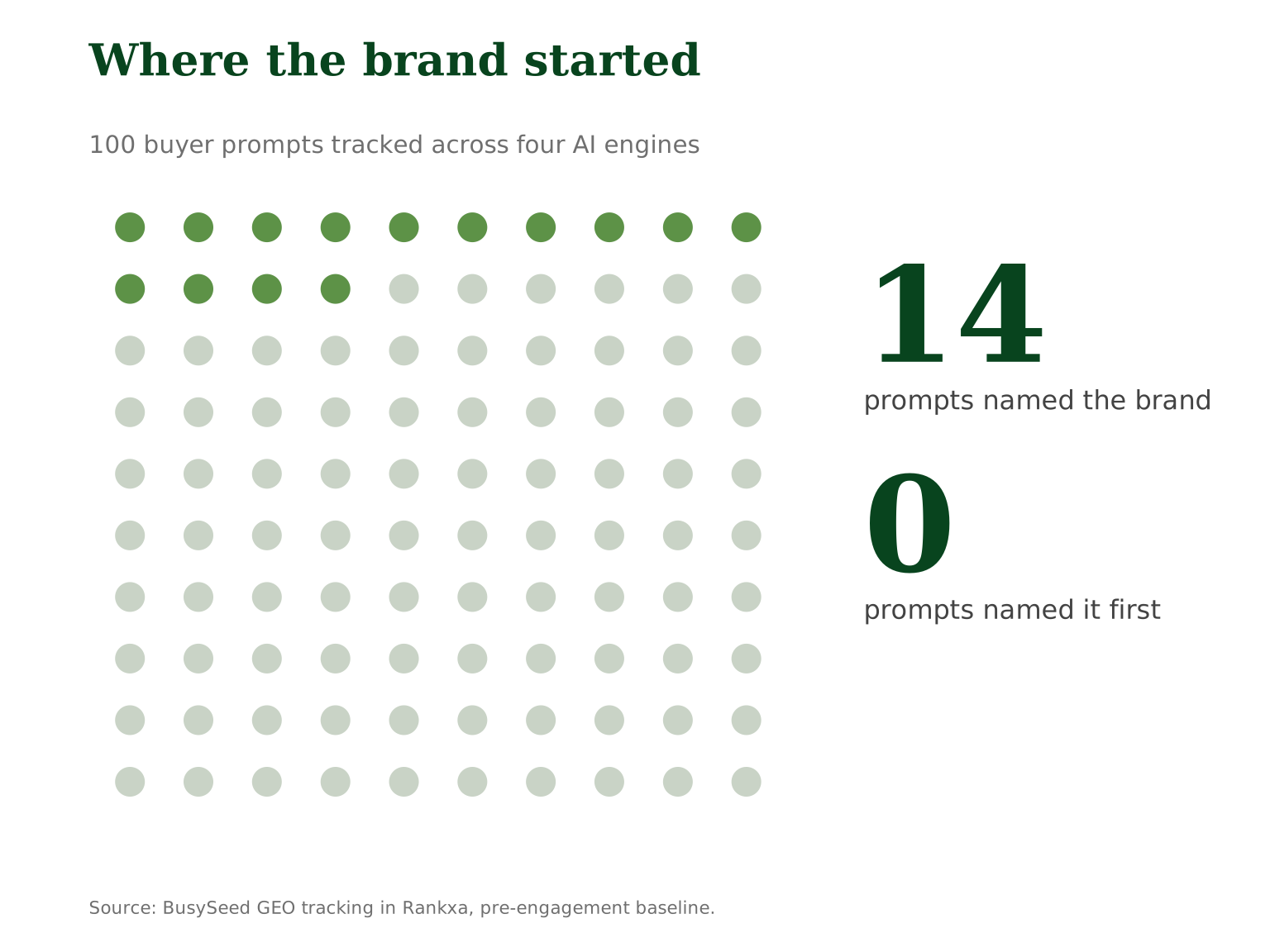
In AI answers it barely existed. Across 100 buyer prompts we tracked every month, the brand appeared in 14. It was named first on none of them. When a buyer asked ChatGPT, Claude, Gemini or Google's AI Overview who to buy from, the answer belonged to three global category leaders and a handful of smaller rivals.
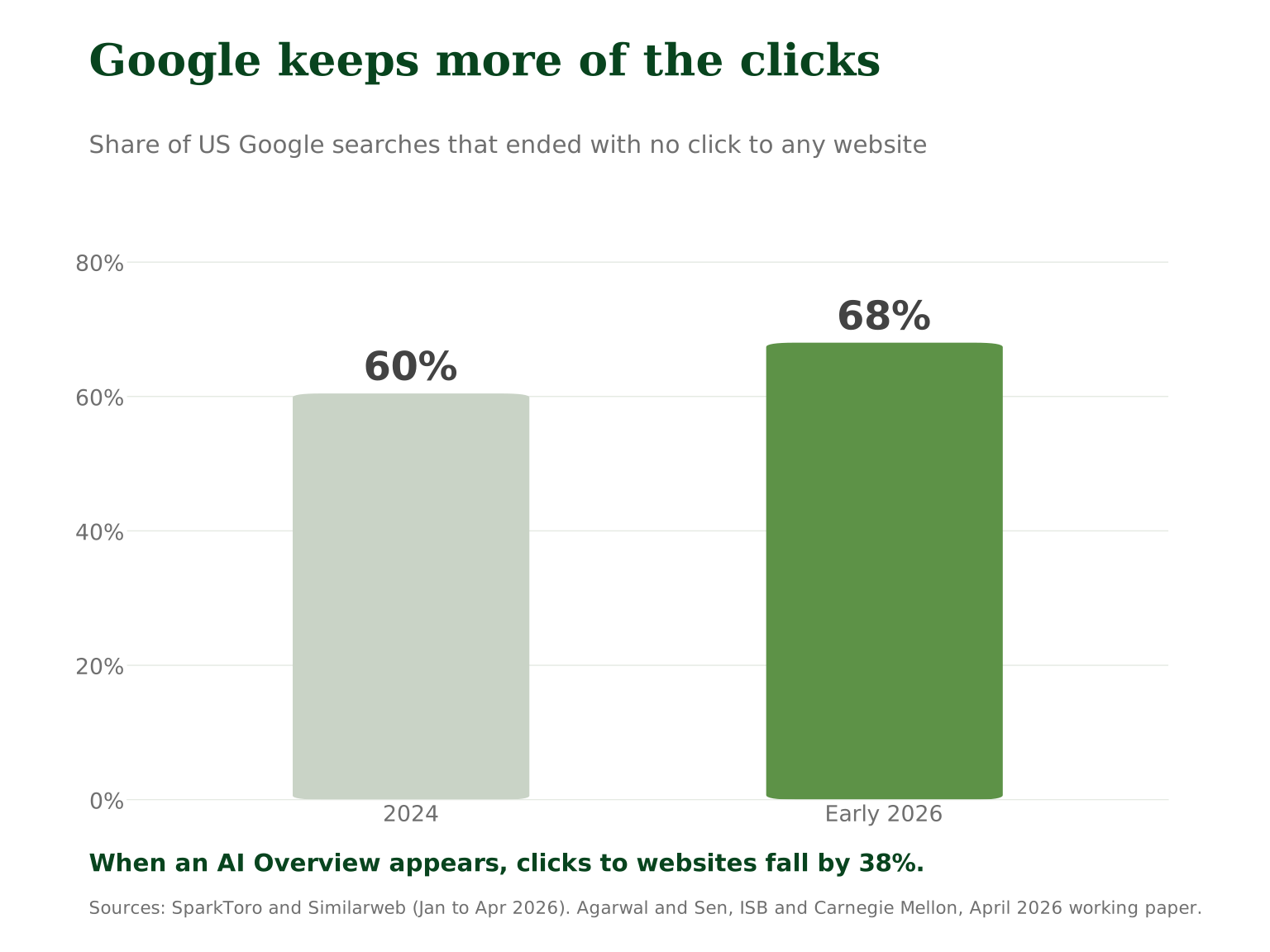
Buyers changed how they shop and most measurement did not follow them. In early 2026, 68% of US Google searches ended without a single click to any website, up from 60% in 2024. A randomized field study published in April 2026 found that when Google shows an AI Overview, clicks to websites fall by 38%.
For a brand that relies on search, that means the shortlist is now written by an AI before a buyer ever reaches a website. If your name is not in that answer, you lose the deal at a stage your analytics cannot see.
An AI answer is assembled from sources the model already trusts, so the work is making the brand one of those sources. Four things ran at once.
We earned editorial coverage on high authority publications, because a claim carries far more weight with a model when a trusted third party publishes it than when a seller says it about itself. We turned the brand's own expertise into long form guides written to be quoted: specific, checkable answers to the questions buyers actually ask about sourcing, specifications, volume and pricing. We implemented schema markup across the site so its facts are machine readable rather than guessed, and we built a genuine presence on Reddit and Quora, which AI engines lean on when a question calls for practitioner experience.
Underneath it all, BusySeed's Rankxa platform tracked 100 buyer prompts continuously across ChatGPT, Claude, Gemini and Google AI Overviews, with every competitor scored alongside the brand.
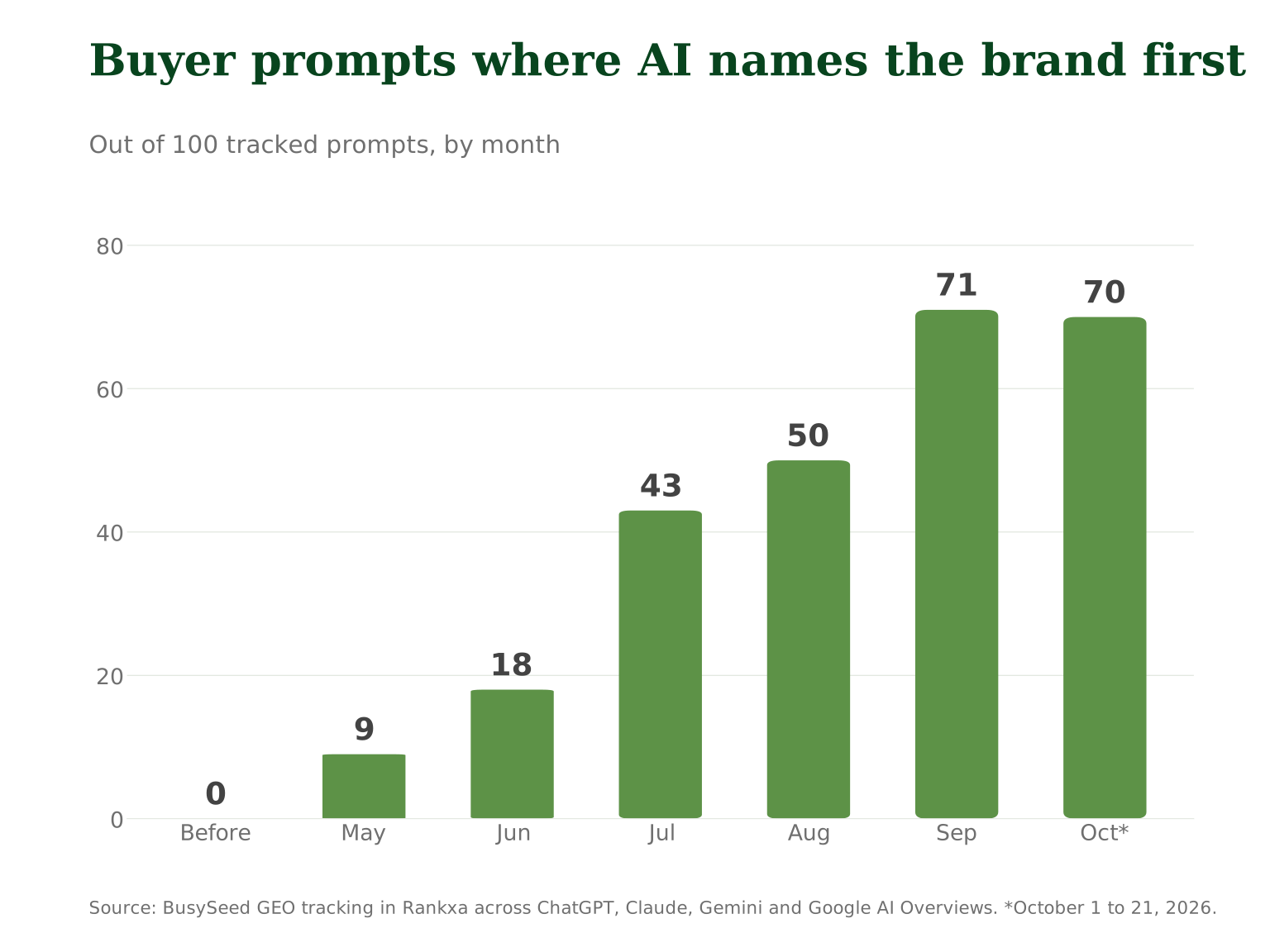
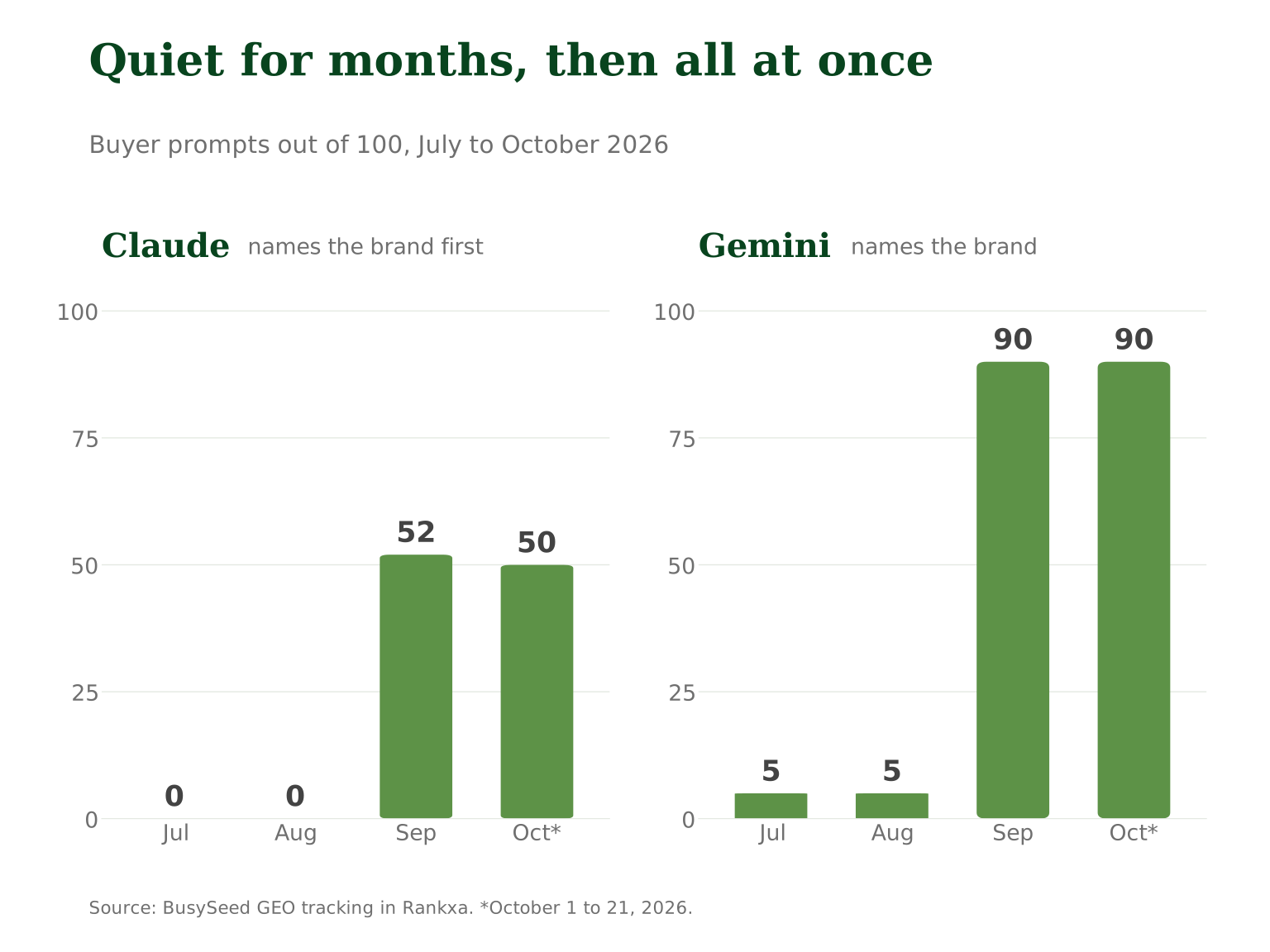
For four straight months, Claude did not name the brand on a single buyer prompt. Every other engine was moving and that line stayed flat while the work continued.
In month five Claude named the brand first on 52 buyer prompts. By October 2026 Claude named it first on 50 of the 100 buyer prompts, usually as the very first recommendation. Gemini followed the same pattern, going from 5 buyer prompts in August to 90 in October.
This is the shape GEO actually has. Authority builds quietly inside a model's picture of a category, then crosses a threshold and converts all at once. A brand that stopped at month four would have walked away four weeks before the payoff.
Yes, at a time when Google was sending fewer clicks to every website. Comparing the last three months with the three months before, the brand's online sales rose 19%, orders rose 11% and the average order grew 7%. Sales from search engines rose 13%.
The same stretch of the calendar a year earlier grew just 1.5%, so this is not simply a seasonal lift. Both windows also sit outside the brand's busiest holiday season, which keeps the comparison honest.
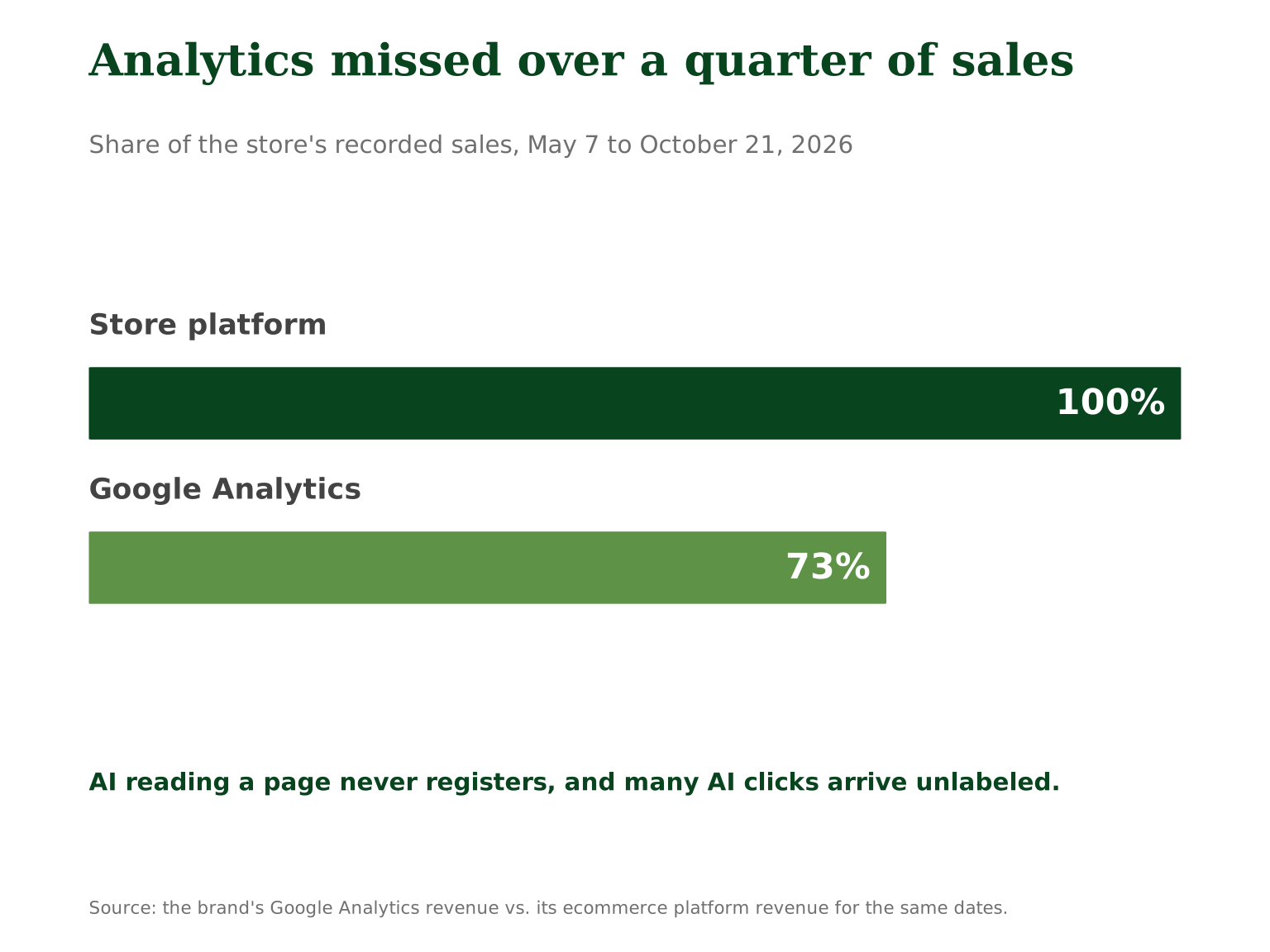
Because most of what AI does with a website never reaches it. Google Analytics only counts visitors whose browser runs its tracking code. When ChatGPT or Claude reads a page to answer a buyer's question, nothing is recorded. When a buyer clicks a link inside an AI answer, the AI app often does not say where the visit came from, so it lands in Direct. Industry samples put that unlabeled share between 36% and 71% of AI visits.
For this brand, Google Analytics recorded about 73% of the sales its own store platform logged during the engagement. That gap is why BusySeed measures AI visibility directly in Rankxa and adds buyer level attribution, such as asking every customer how they found the brand, instead of relying on analytics alone.
Because the field got far more crowded. Over the engagement, the number of rival brands appearing anywhere in the tracked prompts grew from 1,423 to 3,355, more than twice as many names competing for the same answers.
In that crowd the established leaders went backwards. In August 2026 the three largest brands in the category held 625 first place AI answers between them, against this brand's 94. By October those three held 10 first place answers between them, and this brand held 182.
Source: BusySeed GEO tracking in Rankxa: 100 buyer prompts tracked across ChatGPT, Claude, Gemini and Google AI Overviews, May 7 to October 21, 2026. Sales, orders and average order value from the brand's own ecommerce platform, July 23 to October 21, 2026 vs. April 23 to July 22, 2026, with the same windows in 2025 for comparison. Market context from SparkToro and Similarweb (US searches, January to April 2026) and Agarwal and Sen, Indian School of Business and Carnegie Mellon (randomized field study, April 2026 working paper).
Almost 7x as many
From zero to 70
Book a free 15-minute strategy session with founder Omar Jenblat. He'll look at your funnel live and show you exactly where the revenue is hiding. No deck, no fluff, no obligation.